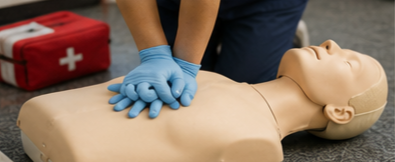
Why basic life support is a practical professional capability—and why confidence must be reinforced through regular learning and practice.
Basic life support is more than a technical checklist. It is a time-critical capability that connects recognition, communication, coordinated action and appropriate clinical response. In any healthcare environment, the first few moments after a collapse can shape what happens next.
For professionals, competence begins with knowing what to look for. A sudden loss of responsiveness, abnormal breathing and the absence of a normal response should trigger a structured emergency response according to local protocols. Clear role allocation and early communication can help a team move from recognition to action without unnecessary delay.
Skills also need reinforcement. Procedures are easier to recall under pressure when they have been learned, practised and discussed before an emergency occurs. Simulation, scenario-based teaching and periodic refreshers can help teams identify practical gaps in equipment readiness, escalation and communication.
BLS education should therefore be viewed as part of a wider culture of preparedness. It is not only about an individual remembering a sequence; it is about people working together within a system that supports rapid recognition, response and learning.
ACCEND perspective: continuing professional development should connect knowledge with practical confidence, teamwork and a commitment to safer care. The exact clinical response should always follow current local policy, authorised training and applicable professional guidance.